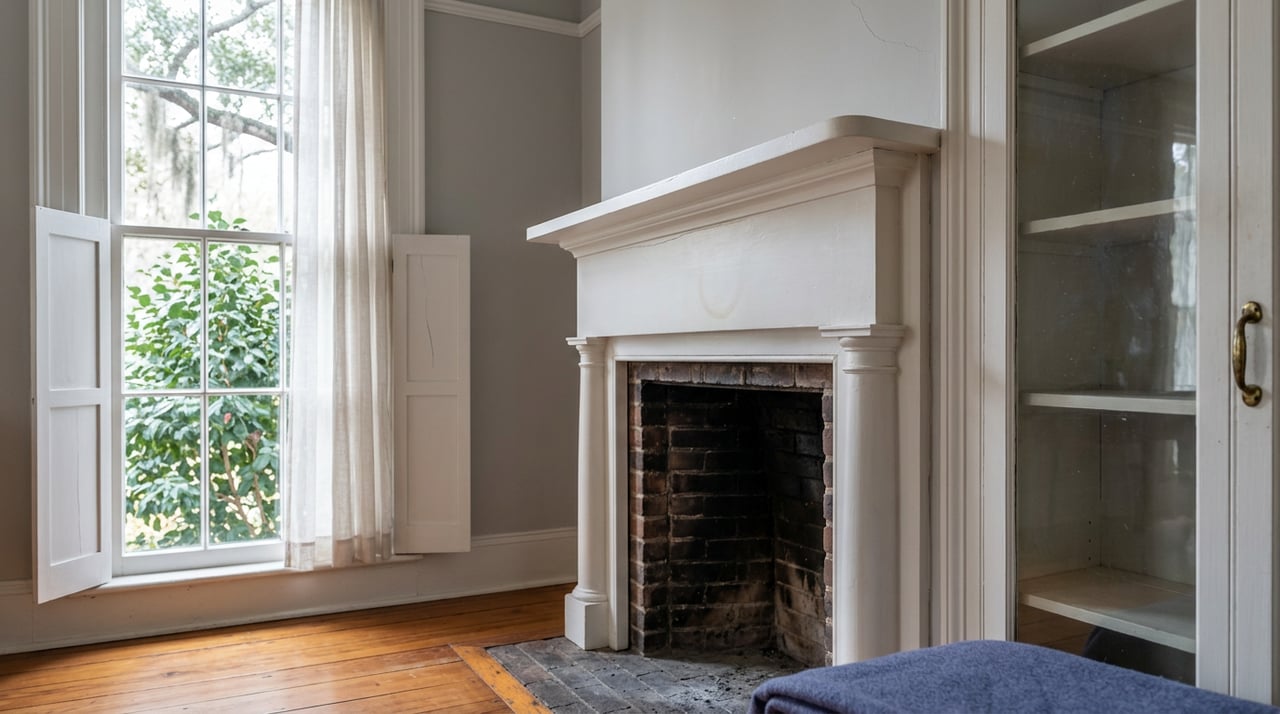
If you're picturing a full kitchen rebuild or a new rear porch on a piazza-front house near Craven Street, you're probably running two numbers in your head: what the contractor will charge, and what the city will require once the scope of work crosses a certain threshold. Most buyers assume the historic label only adds to that second number. Ask around Old Point long enough and you'll hear the opposite is closer to true, at least for one specific and expensive category of construction rule.
That reversal matters here more than almost anywhere else in Beaufort, because Old Point sits at the intersection of two things that don't usually pair well: a National Historic Landmark District designated in 1973, and a downtown core where a meaningful share of properties fall inside a federally mapped flood zone. Most people assume those two facts compound against them. The renovation math says otherwise, in one specific place.
The Assumption Almost Every Buyer Makes
The reasoning goes like this: historic district means a review board, which means more paperwork, which means renovations cost more and take longer. That part is true. The Historic District Review Board handles roughly 175 applications a year across the city's preservation subdistricts, which include Downtown, The Bluff, The Point, and The Old Commons, and any exterior change inside the district, from a new roofline to a rebuilt porch, generally needs a Certificate of Appropriateness before a contractor can start.
What most buyers don't factor in is the flood side of the ledger, where the historic label works in the opposite direction.
What the Flood Rule Actually Says
The National Flood Insurance Program has a rule that trips up a lot of renovation budgets. If the cost of a renovation reaches 50 percent or more of a structure's market value, the whole building has to be brought up to current flood construction standards, meaning the lowest floor gets elevated to or above the base flood elevation set by FEMA. On a house built in 1857, that's not a trim detail. It can mean raising a masonry foundation, relocating mechanical systems, and reworking a floor plan that was never meant to sit a foot and a half higher off the ground.
The same federal framework that creates this trigger also carves out an exception for buildings that carry historic status, as long as the work doesn't strip the property of its designation. Beaufort's own flood ordinance, like every floodplain ordinance that keeps a community eligible for the National Flood Insurance Program, is built on that federal definition. A contributing antebellum home in Old Point can, in practice, absorb a renovation that would force a newer, non-historic house next door into a full elevation retrofit.
This isn't a workaround anyone is hiding. It's baked into how the program was written from the start, on the logic that you can't ask a 200-year-old house to comply with a construction standard invented decades after it was built without threatening the thing that made it worth preserving in the first place. It simply isn't something most buyers hear about until an inspector or a contractor raises it midway through a due diligence period.
Beaufort also carries a Community Rating System Class 6 rating from FEMA, which gives NFIP policyholders inside the flood zone up to a 20 percent discount on premiums, and a 10 percent discount for properties just outside it. That discount applies regardless of a home's historic status. It's a separate lever, but it's worth pulling at the same time you're pricing out insurance, because the two savings stack.
The Second Lever: Beaufort's Bailey Bill
Flood elevation isn't the only place historic status changes the math. Property taxes do too, through a state law known as the Bailey Bill.
The mechanics are straightforward. If an owner invests at least 75 percent of a building's assessed value back into eligible rehabilitation, the city freezes the property's assessed value at its pre-renovation level. In Beaufort's version of the ordinance, that freeze runs for 10 years, shorter than the 20-year maximum South Carolina law allows, which matters if you're penciling out a long-term hold versus a five-year flip. The process runs through the same Historic Review Board: an owner attends an HRB meeting, files a Bailey Bill Part A application alongside the standard HRB paperwork, signs a memorandum of understanding once preliminary approval comes through, then files a Part B application when the work is finished.
The clearest illustration of what this can mean isn't a mansion on the river. Beaufort recently used the Bailey Bill to help save the city's last surviving freedman's cottage, a modest home built by an abolitionist who moved south after the Civil War and still owned, generations later, by three elderly sisters descended from the original builder. Former Mayor Billy Keyserling has pointed to that project as an example of what the incentive is designed to do: make a rehabilitation financially possible for an owner who couldn't otherwise afford it, without asking them to give up the property.
Where the Exemption Has Limits
None of this means historic status is a blanket exemption from cost or complication. A few things worth sitting with before you assume the math works in your favor:
| Situation | Non-historic property | Contributing historic property in Old Point |
|---|---|---|
| Renovation exceeds 50% of market value | Full compliance with current base flood elevation standards required | Exempt from the elevation trigger, as long as historic designation is preserved |
| Major rehabilitation and property taxes | Reassessed at new market value once work is complete | Assessed value can be frozen for 10 years locally if 75%+ of assessed value is reinvested and the Bailey Bill application is approved |
| CRS flood insurance discount | Up to 20% off NFIP premiums inside the flood zone | Same discount, unrelated to historic status |
| Certificate of Appropriateness for exterior work | Not applicable outside the historic district | Required for exterior changes, regardless of contributing status |
Standard homeowners insurance still doesn't cover flood damage anywhere in Beaufort, historic or not, and a separate flood policy is still the only way to close that gap. An elevation certificate still matters for pricing that policy, since the relationship between a home's lowest floor and the base flood elevation drives the premium more than almost anything else. And a home only qualifies for the historic exemption, and for Bailey Bill eligibility, if it's actually recognized as a contributing structure, either through the 1997 Beaufort County Above Ground Historic Resources Survey or through direct review by the board. A house that happens to sit inside Old Point's boundaries but was heavily altered or built later doesn't automatically get either benefit. That distinction, contributing versus non-contributing, is one of the first things worth confirming before you get attached to a specific listing.
Before You Write an Offer or List Your Home
A short list of what to verify, in roughly the order it tends to come up:
- Confirm contributing status through the city's historic resources survey or the Historic Review Board, not just the listing description.
- Request the elevation certificate for the property, or budget for one if it doesn't exist.
- Get a flood insurance quote before you're under contract, not after, since the premium swing based on elevation can run into thousands of dollars a year.
- If you're planning a renovation near or above the 50 percent threshold, ask early whether the historic exemption applies, and get that answer in writing from the city, not secondhand.
- If a rehabilitation is substantial enough to consider the Bailey Bill, start the HRB and Part A paperwork before construction begins. Approval after the fact isn't part of the process.
A Few Questions Worth Asking
Does the historic exemption mean I can skip flood insurance? No. The exemption only affects whether a renovation triggers mandatory elevation to current flood construction standards. It has no bearing on whether a lender requires flood insurance, which is a separate requirement tied to the property's location in the Special Flood Hazard Area.
Is every home in Old Point eligible for the Bailey Bill? No. Eligibility depends on the property being listed on the 1997 historic resources survey or being at least 50 years old and located inside the historic district, then meeting the 75 percent reinvestment threshold on top of that.
If a house isn't listed as contributing, does its location in Old Point still help at renovation time? Not on its own. Location inside the district triggers the Certificate of Appropriateness requirement for exterior work, but the flood elevation exemption and the Bailey Bill both depend on the structure itself carrying historic or contributing status, not just its address.
Every renovation and every Bailey Bill application is specific to the building, and none of this replaces a conversation with a contractor who has worked through an HRB submission before, or a tax professional who can walk through what a 10-year freeze actually saves on your particular assessment. What's true across Old Point is that the historic label, the same one that adds a review step to a new set of shutters, is also the thing quietly protecting a 19th century foundation from a 21st century flood rule, and potentially your tax bill from the cost of the work itself.
If you're weighing a purchase, a renovation, or a sale on Old Point and want to work through what applies to a specific address, Lloyd Williams has spent years inside these transactions and can help you sort out what's actually relevant to your situation. Let's Connect.