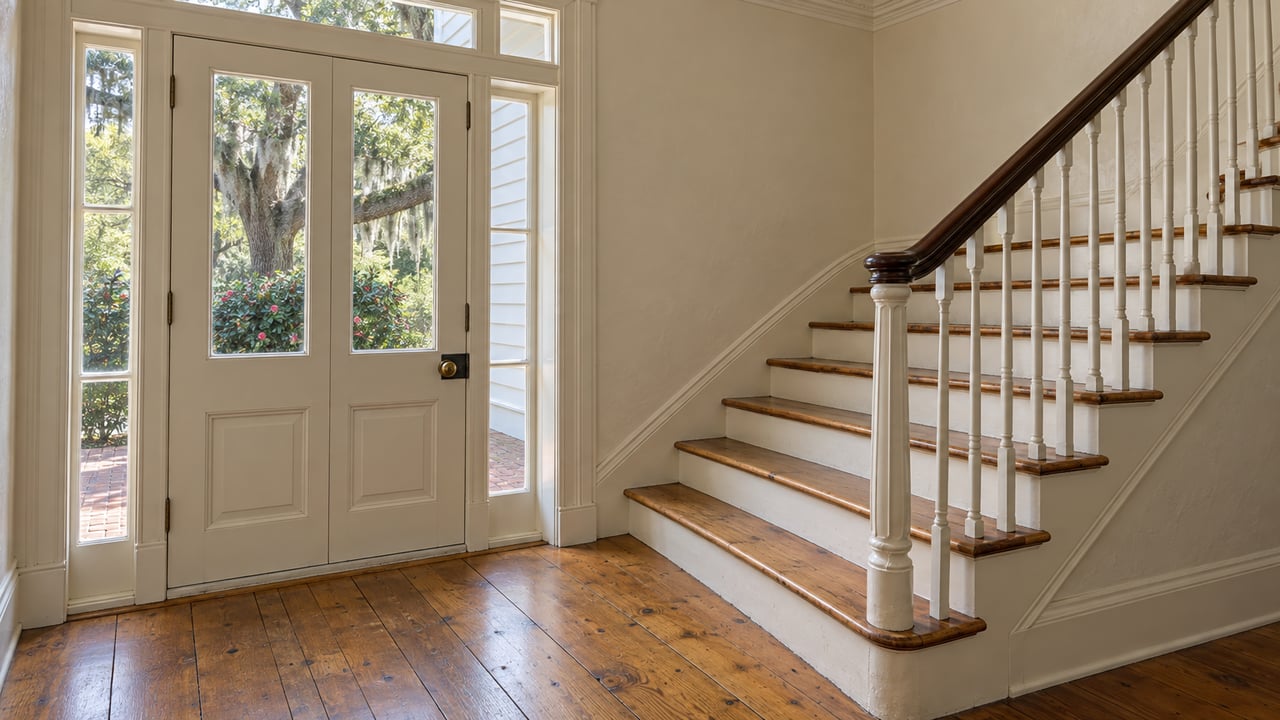
In March, Gene Grace stood before Beaufort City Council with a petition. He has lived in the Point for 51 and a half years, and more than 200 of his neighbors had signed it. By his count, that was more than 90 percent of the neighborhood. The Island Packet reported that twenty people testified for almost two hours that night, and nineteen of them urged the city to keep the short-term rental ban the Point had held since 2018.
About five weeks later, on April 28, council voted unanimously to end it. The Island News reported that the final ordinance "removes a previous restriction that prohibited short-term rentals in The Point, placing that area under the same 3 percent cap as the rest of the historic district."
A buyer reading that headline from out of state could easily assume that a house on Hancock or East Street can now help pay for itself between visits. The cap tells a different story. Removing the ban opened very little in the Point, and someone buying here this fall should expect a house that is lived in, not one that earns rental income.
Why a 3 Percent Cap Already Starts Out Full
The new rules sit in Chapter 18 of the City of Beaufort code, adopted as Ordinance No. 2026-11. Inside the National Historic Landmark District, no more than 3 percent of allowable parcels may be short-term rentals, meaning stays of fewer than 30 days. Outside the district, the limit is 4 percent of allowable parcels in each designated neighborhood. When an otherwise eligible application runs into the cap, the code adds it to a waitlist, and the city uses that list to license new rentals only after the count drops below the limit.
The Point overlooks the Beaufort River on the city's east edge, inside the landmark district, so the 3 percent figure is the one that applies.
Rentals that already exist count against the cap. The Island News described this as "tightening the overall limit." Mayor Phil Cromer told the Post and Courier that when the ordinance passed in April 2026, the historic district held 91 short-term rentals. About 30 would be allowed under the 3 percent rule. He said it could be "years before the numbers come down."
That changes what lifting the ban actually did. The Point is no longer a separate exclusion zone, but it has joined a district that was roughly three times over its limit on the day the rules took effect. A new application from the Point stands behind the same line as every other applicant in the district.
| The Point before April 28, 2026 | The Point after April 28, 2026 | |
|---|---|---|
| Short-term rentals allowed? | Banned, with six properties grandfathered in 2018 | Allowed under the historic district's 3 percent cap |
| Status of the cap | Did not apply | District held 91 rentals against roughly 30 allowed, as of April 2026 |
| New applicant's path | None | Waitlist until the district count falls below the cap |
| Spacing rule | Did not apply | At least 300 feet from any other rental |
Spacing Matters More on Blocks This Close Together
The cap is the first limit. The second is distance. Under the code, no short-term rental may sit closer than 300 feet to another, measured from the nearest points of the two parcel lines. The code also allows only one rental per parcel.
Three hundred feet is a short walk, but in the Point it can cover several lots. A historic house may sit within that distance of a rental that was licensed before the ordinance. In that case, even a spot opening up on the waitlist would not make the house eligible.
Councilman Josh Scallate argued for removing the Point's ban on fairness grounds. The Post and Courier quoted him at a March 10 meeting warning that singling out one neighborhood "could become 'spot zoning.'" The ordinance he helped shape treats the Point like any other historic-district block, which also means it inherits the district's backlog and its spacing math.
A Sale Changes What an Existing Rental Is Allowed
This section matters most to anyone buying a house that already operates as a rental, or selling one. Rentals that were properly licensed before the chapter took effect do not have to meet the 300-foot rule. The code limits how long that protection lasts:
"Any properly licensed STR operating before the effective date of this chapter is exempt from this requirement unless and until there is a conveyance of the STR, there is a revocation of the STR owner's business license, or the STR has not been rented for a period of six (6) months or more."
The chapter defines a conveyance as a transfer that triggers a reappraisal and reassessment for property tax purposes. An ordinary sale is the clearest example. The spacing exemption belongs to the existing arrangement, and a sale ends it.
Inheritance gets a one-time exception, so an heir may keep operating a licensed rental, and a later transfer by inheritance must meet the rules in full. The rehabilitation exception, covered below, states that a permit issued under it "shall not run with the land." Enforcement strikes, on the other hand, reset after "a bona fide transfer of ownership with no common ownership interest."
For a seller, past rental income is a weak basis for an asking price. Before an offer, a buyer should get the city's business license office to answer directly what a closing would do to that specific license. Ask the city, and get the answer in writing.
The Exceptions Mostly Fit Someone Else
The ordinance includes a few paths outside the cap. Each is narrow, and most will not apply to a buyer arriving this fall.
- Rehabilitated dilapidated properties. A purchaser may receive a permit outside the cap if the city listed the property as abandoned or dilapidated at any point between January 1, 2025, and April 28, 2026, and the current owner acquired it in that same window. The owner must also bring it fully into code compliance and receive a certificate of occupancy or final inspection approval. The acquisition window closed in April.
- Inheritance. An heir may continue a licensed rental one time.
- Multiple rentals on one parcel. Owners whose multiple rentals were lawfully established and operating before April 28, 2026, may apply for a special exception, which requires a public hearing.
- Carriage houses and accessory units. These may be rented short term, but still under the one-rental-per-parcel limit, so they count toward the same cap.
The code also separates an owner-occupied rental, meaning the owner's legal residence taxed at the 4 percent assessment ratio, from an investment rental. The cap provisions do not distinguish between the two.
What a Licensed Rental Must Do Under the New Rules
Even for the few houses that hold or get a license, the chapter treats short-term rentals as a regulated business. Several rules reflect the concerns Point residents raised at council about parking and traffic on narrow, oak-lined streets.
- Parking goes to the side or rear of the house on a delineated surface. Formalized on-street parking may substitute where it exists.
- Every stay lasts at least two nights, with no more than two adult guests per bedroom.
- Guests may not host events of more than 25 people or play outdoor amplified music.
- A manager must be able to reach the property within one hour of a city complaint. A backup manager is also required unless the owner or registered agent certifies that the house will not be rented while they are away from the city.
- A monitored fire alarm is required, along with a city safety inspection.
- Strikes count over a rolling twelve months. The first brings a written warning, the second a $500 fine, and the third can mean suspension, revocation or nonrenewal of the license.
- Within ten days of issuing a license, the city mails notice to adjoining owners, including those across the street.
The city's program sheet lists a $100 application fee, or $1,000 for a rental that operated before approval. The code also requires an annual short-term rental fee "as set by city council," on top of the business license tax. At the time of the vote, the Post and Courier reported that the city was looking at a $1,000 annual fee. Ask the city for the current figure before you build it into a budget.
Questions to Settle Before an Offer on a Point House
If rental income is any part of your plan, take these questions to the City of Beaufort before you sign a contract.
- Where does the historic district's current rental count stand against its 3 percent cap, and how long is the waitlist?
- Is any licensed rental within 300 feet of this parcel? The city's Short Term Rentals Viewer is a good place to start.
- If the house holds a license today, what happens to that license when it closes to a new owner?
- What annual short-term rental fee is in effect right now?
- If the plan is a carriage house rental, does the parcel already count as the one rental it is allowed?
This is general information about how the city's ordinance reads, not legal, tax or financial advice. Please confirm your own situation with the city, an attorney or a tax professional before you rely on it.
If you are weighing a house here and want to talk through how the rental rules affect a specific property, Lloyd Williams would be glad to go through it with you before any money is committed. Let's Connect.