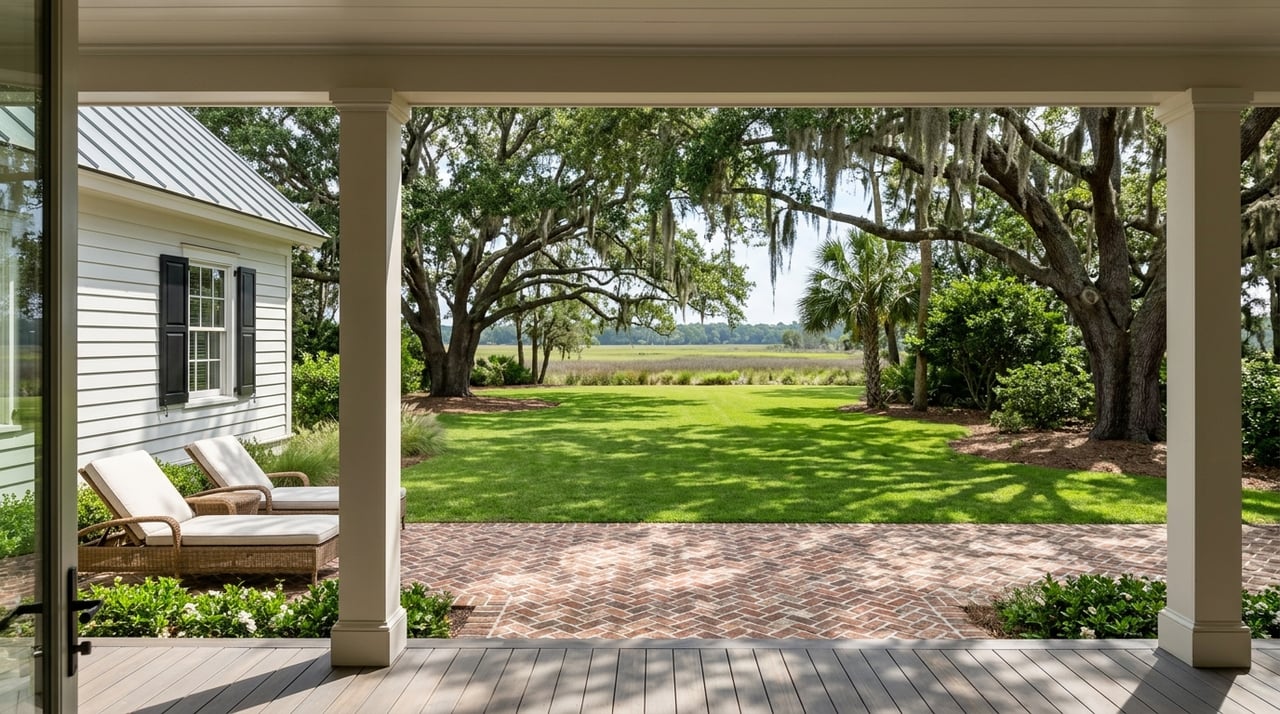
If you are drawn to Kane Island, chances are you are not just buying a piece of land. You are choosing how you want to live with water, trees, privacy, and access in one of the Beaufort area’s most talked-about new waterfront settings. The right homesite can support that vision beautifully, but the wrong one can create avoidable compromises. This guide will help you compare lots with a clear eye so you can make a smart, confident decision. Let’s dive in.
Start With Kane Island’s Setting
Kane Island is described as a nearly 230-acre community on the north end of Cane Island, less than ten minutes from historic Beaufort. The current early-release offering focuses on 16 waterfront homesites along the north shore, with lot sizes ranging from about 1.3 to 4 acres.
Those homesites are being marketed for river and marsh views, and almost all are said to offer deepwater access. Kane Island also states that docks are preapproved on those lots, which will matter to buyers who see boating and waterfront use as part of daily life.
At the same time, the community’s official materials emphasize preservation, open space, and a more natural scale. Live oaks, magnolias, farmland, and broad green areas are central to the vision, which means your homesite decision should be about more than just picking the lot with the biggest water view.
Compare View and Buildability
Water views can vary by lot
Because this first release sits along the north shore, many buyers will naturally focus on river and marsh outlooks. That is a good place to start, but it should not be the only factor.
Two homesites may both appear to offer strong views on a map, yet the actual experience can be very different once you account for house placement, porch orientation, tree protection, and sightlines across the water. A lot that looks perfect on paper may have more limitations when it comes time to design the home.
Orientation matters as much as scenery
As you compare lots, think about where your main living spaces would go. You want to consider how the homesite frames the view from the kitchen, family room, primary suite, porch, and outdoor living areas.
On a waterfront parcel, the best lot is not always the one with the broadest view. Often, it is the lot that lets your future home sit naturally on the land while still capturing the outlook you care about most.
Trees may shape the final result
Kane Island’s plan places a strong emphasis on specimen trees and preservation. That is part of the appeal, but it can also affect where a home, driveway, pool, or porch can realistically go.
The Upper Cane Island PUD documents also note that roads, lot lines, and tract layouts may need minor alterations before construction to address tree protection, regulations, stormwater, flood issues, and other site conditions. In practical terms, that means the final buildable result may differ from the marketing map.
Look Beyond Lot Size
Privacy comes from adjacency
A large homesite may sound ideal, but size alone does not define privacy. What matters just as much is what sits beside and behind the lot.
When choosing a homesite in Kane Island, compare whether the lot adjoins preserved land, a roadway, marsh edge, common area, or another future homesite. Those edges will shape how private the property feels once the community matures.
Preserve areas can add long-term value
Kane Island’s materials repeatedly highlight open spaces, protected trees, and natural buffers. For many buyers, that creates a stronger sense of place and a more lasting landscape than a standard lot layout would.
If privacy and a natural setting matter to you, pay close attention to which homesites benefit from preserved land nearby. That relationship may influence your enjoyment of the property just as much as the square footage of the lot itself.
Understand Water Access Clearly
Deepwater access should be verified lot by lot
Kane Island says almost all of the waterfront homesites offer deepwater access, and that docks are preapproved on those lots. That is a strong starting point, but you should still confirm the status of the specific lot you are considering.
On Beaufort County coastal property, water access is tied to more than a brochure description. You will want clarity on the specific dock status, shoreline condition, and any site constraints that may affect how access works in practice.
Shoreline rules are a real factor
Beaufort County’s planning system includes separate applications for docks, view corridors, special use permits, flood maps, and elevation or flood certificates. The county also enforces floodplain regulations.
County guidance further states that a vegetated river buffer exists landward of the critical line and cannot be disturbed without a permit from Planning and Zoning. That makes shoreline review an important part of your lot selection process, especially if you expect to build close to the water or make the most of a dock.
Erosion and protection issues matter too
A current South Carolina environmental permit application for Kane Island shoreline erosion-control structures shows that shoreline protection and permitting are active issues in this setting. That does not mean a lot is a poor choice. It means waterfront ownership here requires thoughtful due diligence.
The more you understand the shoreline early, the fewer surprises you are likely to face later.
Review the PUD and Permit Path
The marketing map is not the final word
One of the most important things to understand about Kane Island is that the planned unit development documents matter. The Upper Cane Island PUD master plan covers development standards, access, streets, drainage, flood hazard zones, utilities, wastewater, and fire protection.
It also states that exact specifications should come from recorded plats and restrictions, and that the plan itself is for zoning purposes. If you are serious about a homesite, those controlling documents deserve careful review before you write an offer.
Coastal permitting affects design choices
In Beaufort County, building on waterfront land often involves several layers of review. Depending on the homesite, your project may involve building and zoning permits, flood-related documentation, dock considerations, and view corridor review.
That is why lot selection and house design should never be treated as separate decisions. A homesite that supports your desired footprint more easily may be the better value, even if another lot first grabs your attention with a dramatic view.
Match the Lot to the Home You Want
Kane Island has a clear design direction
Kane Island says its buildings and amenities are intended to reflect Lowcountry vernacular. The official language points to gentle roof lines, wide porches, natural materials, and a scale that is not overbuilt.
That is useful guidance when choosing between homesites. Some lots may better support a long, low house with broad porches, while others may require a more compact layout because of trees, buffers, or building-envelope constraints.
Your homesite should fit your priorities
Before choosing a lot, define what matters most in the home itself. You may want a primary suite on the view side, a detached guest space, a pool, a wider driveway approach, or a sheltered porch that captures breeze and water.
Once those priorities are clear, it becomes easier to evaluate which homesite truly fits your plan. That approach is usually more effective than starting with a favorite lot and trying to force the design later.
Why a Local Coastal Builder Helps Early
The lot decision in Kane Island is closely tied to tree preservation, drainage, shoreline conditions, and permit sequencing. That is why builder input can be valuable before, not after, you commit.
The PUD documents indicate that site conditions and regulations can affect final layouts. A builder with regular Beaufort County coastal experience is more likely to spot issues tied to flood requirements, buffers, grading, and practical construction costs early in the process.
This does not just help with design. It can also help you avoid overpaying for a homesite that looks exceptional in marketing materials but proves more complicated to build on than expected.
Questions to Ask Before You Write an Offer
If you are narrowing down homesites in Kane Island, these are smart questions to ask:
- What are the exact lot lines, easements, building envelope, and recorded covenants for this homesite?
- Which land-use area or district is the lot in, and how could that affect privacy, buffers, or future adjacency?
- Is a dock preapproved for this specific lot, and what additional county or state permits may still be needed?
- What parts of the shoreline, marsh edge, or river edge fall within a buffer or critical area?
- What flood zone, finished-floor elevation, and flood-certificate requirements apply?
- Which planned amenities are definite, and which are still conceptual?
- What utility service is planned for the lot, and are there any unresolved wastewater or service questions?
- Can the seller or developer provide the Property Report before contract?
These questions can help you move beyond a surface-level impression and focus on what will affect ownership, design, and long-term enjoyment.
A Smart Way to Narrow Your Options
When I help buyers compare waterfront and land opportunities around Beaufort, I encourage them to rank each homesite in a few simple categories:
- View quality
- Privacy
- Tree impact on design
- Ease of building
- Water access
- Permit complexity
- Proximity to roads and access routes
- Fit for the style of home they want
That kind of side-by-side comparison can quickly reveal which lot is truly the strongest overall choice. In a community like Kane Island, the best homesite is rarely just the prettiest one. It is the one that balances view, privacy, usability, and the realities of building in a coastal setting.
The Bottom Line on Kane Island Homesites
Choosing a homesite in Kane Island is really about balancing beauty with practicality. The key tradeoff is not simply view versus privacy. It is how each lot handles outlook, tree preservation, shoreline access, building envelope, and the permit path that comes with waterfront land in Beaufort County.
If you take the time to review the recorded documents, verify dock and flood conditions, and think carefully about how you want the home to live on the land, you will be in a much stronger position to choose well. And if you want experienced local guidance as you compare Kane Island opportunities or other waterfront homesites in Beaufort, Lloyd Williams is here to help.
FAQs
What should you compare first when choosing a Kane Island homesite?
- Start with the combination of view, privacy, buildability, and water access rather than focusing on lot size alone.
Do Kane Island waterfront homesites have dock access?
- Kane Island says almost all of the early-release waterfront homesites offer deepwater access and that docks are preapproved, but you should confirm the exact status for the specific lot.
Why do Beaufort County permits matter for Kane Island lots?
- Beaufort County coastal properties may involve building, zoning, dock, flood, view corridor, and shoreline-related review, which can affect design and timing.
Can trees affect where you build on a Kane Island lot?
- Yes. Kane Island emphasizes preservation of specimen trees, and that can shape the placement of the house, driveway, porches, and outdoor spaces.
Are Kane Island renderings and amenities final?
- No. The official materials say renderings are subject to change and that proposed future development is not guaranteed.
Why is local builder experience important for a Kane Island homesite?
- A builder with Beaufort County coastal experience can help you understand flood requirements, buffers, drainage, tree constraints, and likely construction complexity before you commit.